
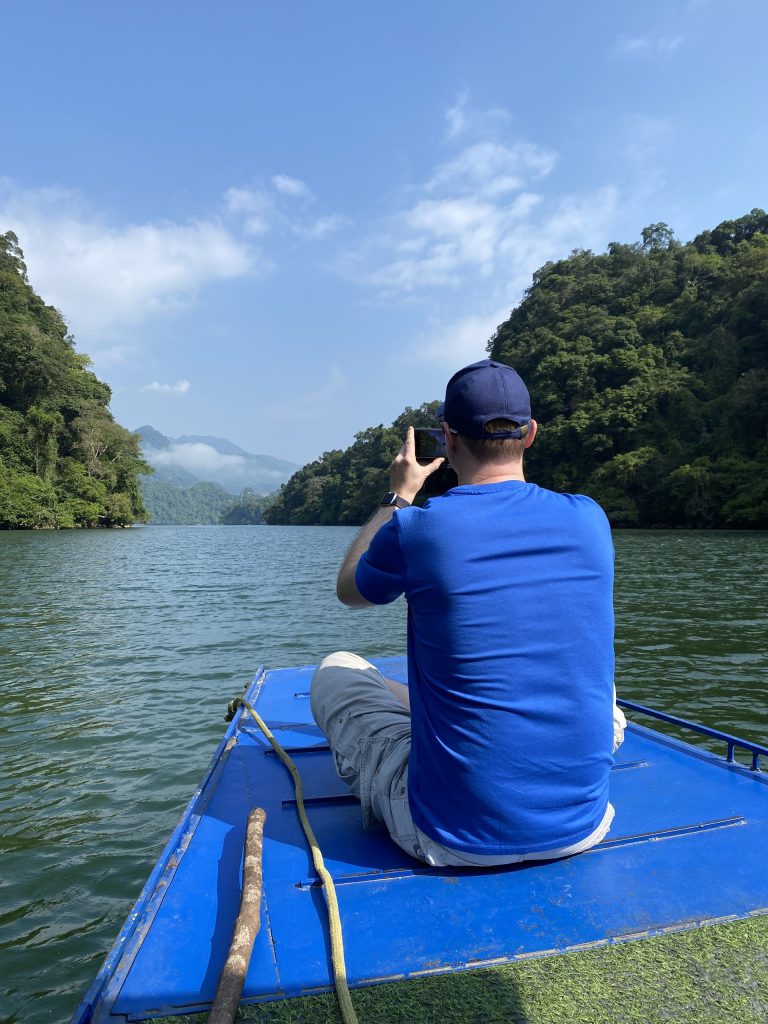
Tucked away in the northeastern province of Bac Kan, approximately 230 kilometers north of Hanoi, lies Ba Be National Park (Vườn quốc gia Ba Bể). Recognized as an ASEAN Heritage Park and a Ramsar Wetland of International Importance, this pristine reserve centers around Vietnam’s largest natural freshwater karst lake.

Surrounded by sheer limestone peaks, dense evergreen rainforests, subterranean river systems, and traditional Tay ethnic stilt-house villages, Ba Be offers an authentic escape far removed from the mass-tourism hubs of Ha Long Bay or Ninh Binh.
Whether you are seeking peaceful boat cruises, high-adrenaline jungle trekking, kayaking through limestone arches, or immersive local homestay hospitality, this definitive Ba Be National Park travel guide provides all the actionable information you need to plan an unforgettable journey.
1. Quick Facts & Overview
- Location: Ba Be District, Bac Kan Province, Northeast Vietnam.
- Elevation: Roughly 150 to 1,525 meters above sea level (lake surface sits at ~150 meters).
- Lake Composition: Ba Be translates to “Three Lakes”—comprising Pe Leng, Pe Lu, and Pe Lam—spanning about 8 kilometers in length and up to 35 meters in depth.
- Ethnic Communities: Primarily Tay people living in lakeside stilt houses, alongside Dzao (Dao) and H’Mong ethnic communities inhabiting the higher mountain ridges.
- Biodiversity: Over 1,200 plant species, 330 bird species, and dozens of rare mammals, including the endangered Francois’ langur, Asian black bears, and civets.


2. Best Time to Visit Ba Be National Park
Ba Be exhibits a subtropical highland climate with four distinct seasons. While accessible all year, your choice of travel window determines your outdoor experience:
- Spring (February – April): Mild, refreshing weather (18°C – 25°C). The hills burst with spring blossoms, and ethnic villages celebrate the Long Tong Festival (Plowing Festival) on the 10th day of the first lunar month with traditional folk games and boat races.
- Summer (May – August): Ideal for water sports. Expect warm temperatures (28°C – 34°C) with vibrant emerald waters perfect for kayaking, stand-up paddleboarding (SUP), and wild swimming. Afternoon rain showers are common, keeping the surrounding jungle lush and waterfalls roaring.
- Autumn (September – November): The golden season for photographers and hikers. Stable dry weather, clear blue skies, comfortable temperatures (20°C – 26°C), and golden harvest colors across the terraced rice fields.
- Winter (December – January): Cool, crisp, and mist-shrouded (10°C – 16°C). Morning fogs create ethereal landscapes over the water. This is prime season for demanding long-distance trekking, as the trails remain dry and cool.
3. How to Get to Ba Be Lake from Hanoi
The journey from Hanoi to Ba Be National Park takes approximately 4.5 to 6 hours, following the modern Hanoi – Thai Nguyen – Bac Kan Expressway (CT07 / QL3) before branching into scenic provincial roads.
| Transportation Type | Travel Time | Estimated Cost (VND / USD) | Best For | Pick-up / Drop-off Details |
| Limousine Tourist Shuttle | 4.5 – 5.0 hours | 300,000 – 380,000 VND ($12 – $15) | Independent travelers seeking comfort & direct transfer | Pick-up at Hanoi Opera House direct drop-off at Pac Ngoi, Bo Lu homestays. |
| Local buses | 5.5 – 6.0 hours | 200,000 – 250,000 VND ($8 – $10) | Budget backpackers | Departs from My Dinh Bus Station to Cho Ra town. Requires a local taxi/motorbike (~15 km) into the park. |
| Private Car Rental | 4.0 – 4.5 hours | 2,300,000 – 3,000,000 VND ($90 – $125) / day | Families, small groups, flexible photo stops | Door-to-door direct service with personalized schedules and stops local tea hills. |
| Motorbike Road Trip | 6.0 – 7.0 hours | ~150,000 VND fuel | Experienced adventure riders | Route: Hanoi → Thai Nguyen → Bac Kan City → Cho Don → Ba Be Lake. Excellent mountain pass riding. |
4. Entrance Fees & Service Costs
Budgeting for your trip is straightforward, as entrance fees and standard boat charter rates are regulated.
- National Park Entrance Ticket: ~70,000 – 80,000 VND / adult (~$3.00 – $3.50); ~26,000 VND / child.
- Motorized Sightseeing Boat Charter (Whole Boat, up to 10–12 passengers):
- Standard Route (Lake – An Ma Temple – Fairy Pond – Widows Island): 600,000 – 800,000 VND.
- Full-Day River & Lake Circuit (Buoc Lom Pier – Puong Cave – Dau Dang Waterfall – Fairy Pond – An Ma – Pac Ngoi): 1.200,000 – 1,400,000 VND
- Kayak / SUP Rental: 100,000 – 150,000 VND / hour or ~300,000 VND / half-day.
- Hua Ma Cave Ticket: 45,000 VND / person.
- Local Trekking Guide: 400,000 – 800,000 VND / day (depending on trail complexity and group size).
5. Top Things to Do in Ba Be National Park
This complete Ba Be Lake guide breaks down the essential landmarks, boat stops, and karst geological wonders you should not miss.
       [Nang River Route: Buoc Lom Pier]
                     │
                     ▼
             [ Puong Cave ] (Động Puông)
                     │
                     ▼
            [ Cam Ha / Nang River ]
                     │
                     ▼
          [ Dau Dang Waterfall ] (Thác Đầu Đẳng)
                     │
        ┌────────────┴────────────┐
        ▼                         ▼
   [ Fairy Pond ]           [ Ba Be Lake Basin ]
     (Ao Tiên)          (Pe Leng - Pe Lu - Pe Lam)
                                  │
                       ┌──────────┴──────────┐
                       ▼                     ▼
               [ An Ma Temple ]       [ Widows Island ]
                 (Đền An Mạ)            (Đảo Bà Góa)
1. Cruise Through Puong Cave (Động Puông)
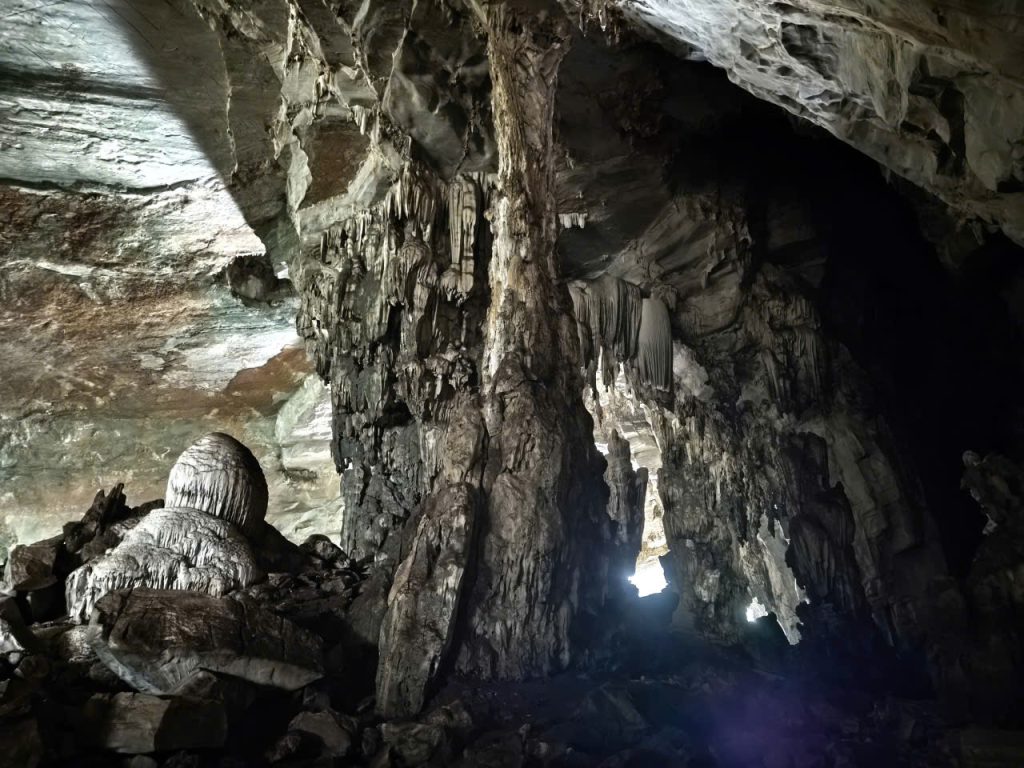
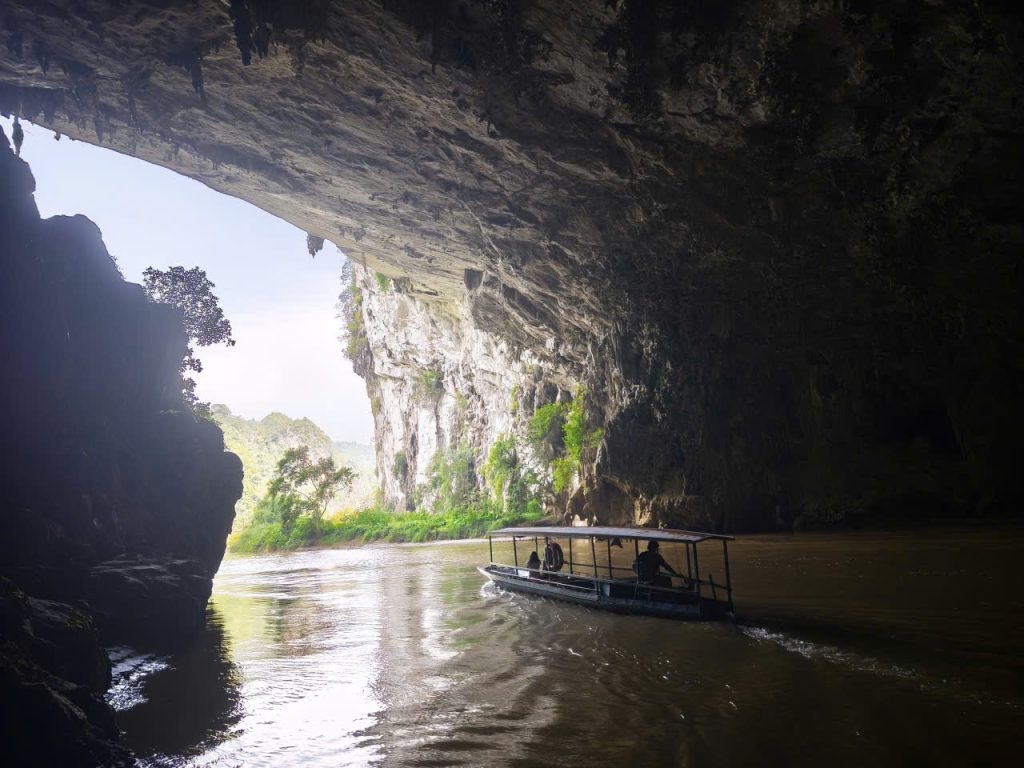
Formed where the powerful Nang River burrows entirely through the Lung Nham limestone mountain range, Puong Cave is a 300-meter-long subterranean tunnel rising nearly 30 meters high. As your wooden boat glides into the cave’s cathedral-like darkness, you will pass towering stalactites and stalagmites formed over millions of years. Look up to observe a thriving colony of tens of thousands of bats clinging to the cave ceiling.
2. Marvel at Dau Dang Waterfall (Thác Đầu Đẳng)
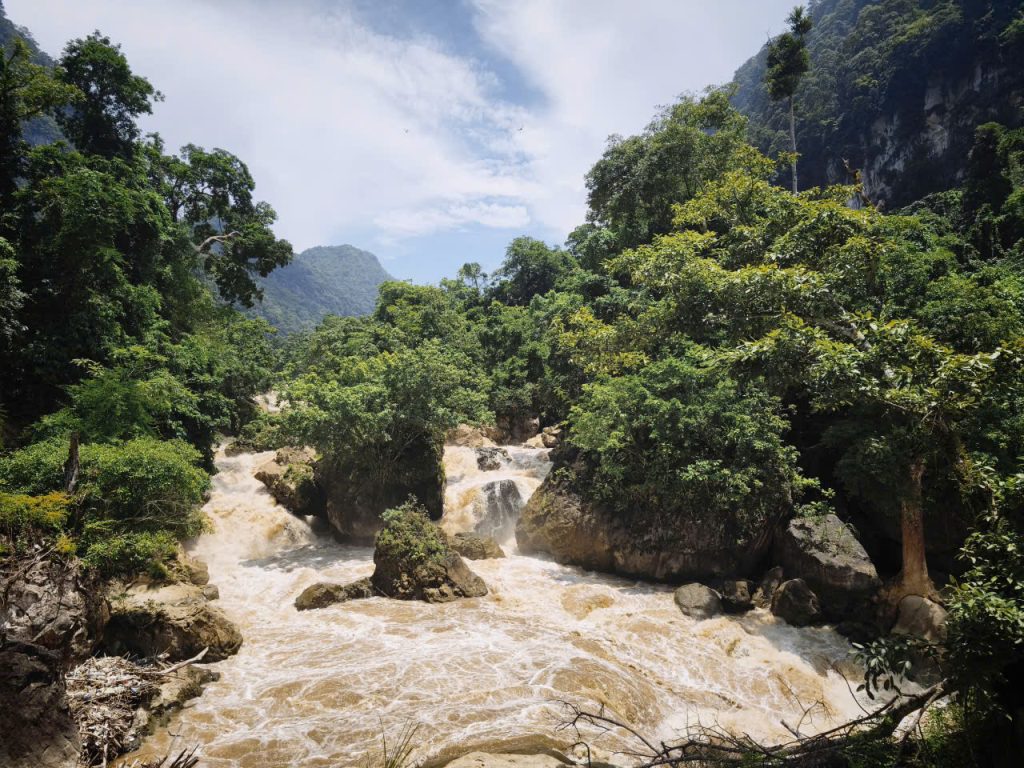
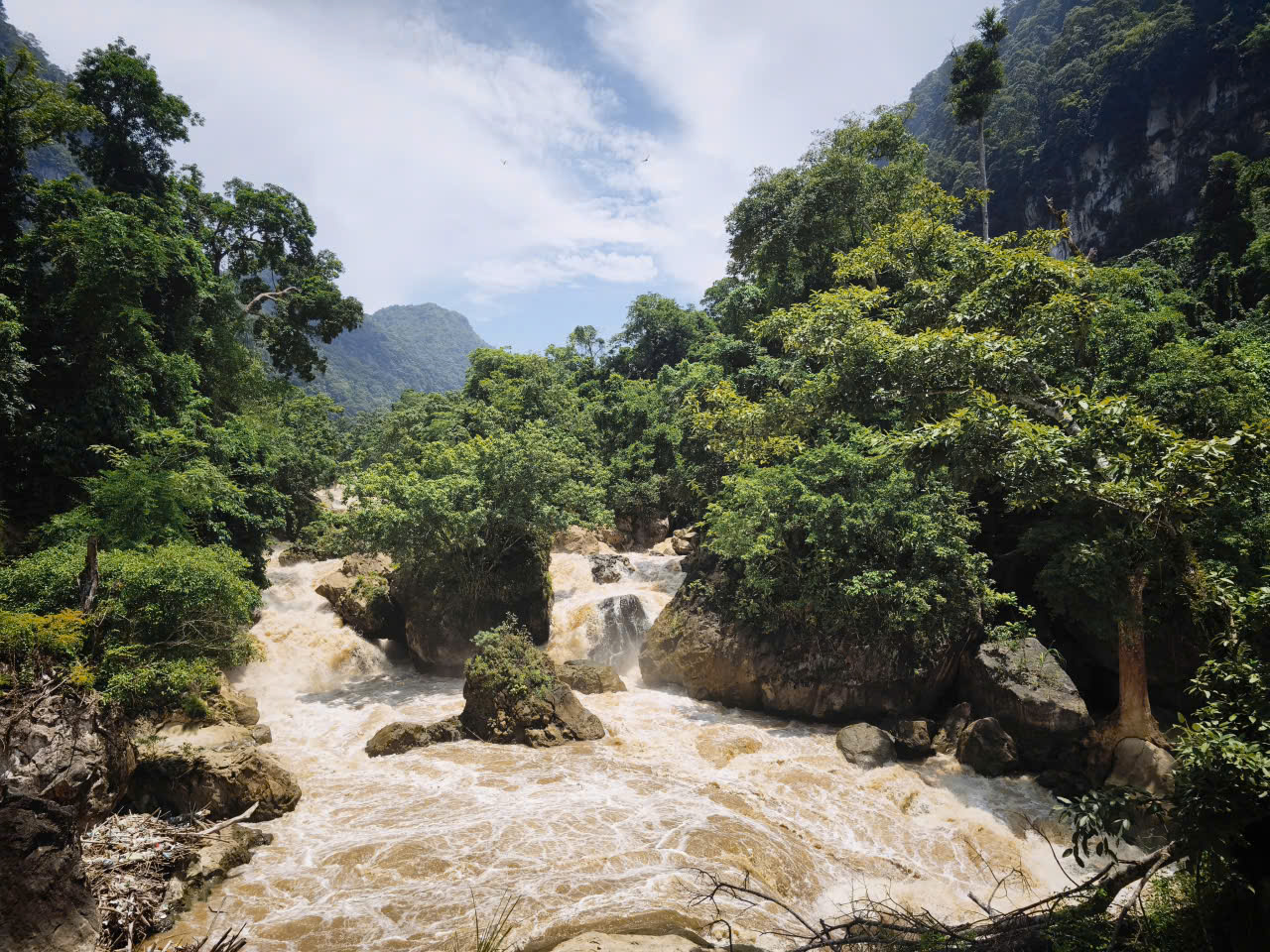
Located where the Nang River flows toward Tuyen Quang province, the riverbed is interrupted by hundreds of massive granite boulders. The river cascades over a 1,000-meter stretch of rocky tiers, creating the thunderous Dau Dang Waterfall. A scenic riverside stone path allows travelers to hike parallel to the rapids, leading down to traditional open-air fish restaurants near the lower boat landing.
3. Discover Fairy Pond (Ao Tiên)
Hidden deep in the karst forest just a short climb from the lake’s northern edge, Fairy Pond is a circular sinkhole (karst doline) filled with crystal-clear groundwater. Isolated from the main lake, the pond maintains an emerald mirror surface flanked by ancient jungle trees. Local folklore tells that celestial beings once descended from the heavens to bathe and play chess here.
4. Visit An Ma Temple & Widows Island (Đảo Bà Góa)
- An Ma Temple: Located on a sacred wooded islet on Pe Lu Lake, this temple honors Buddha and loyal generals of the Mac Dynasty who defended the northern border. It is a place of serene spiritual contemplation.
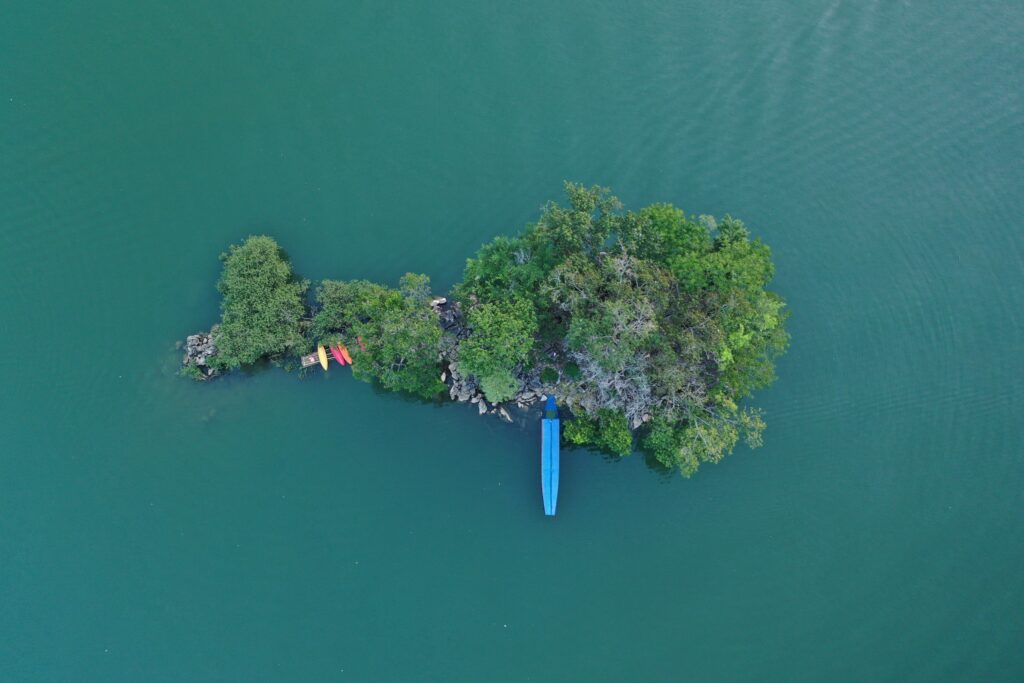
- Widows Island: A picturesque, solitary limestone islet jutting out of the center of Pe Leng Lake. According to legend, the island was the humble dwelling of a kind widow and her son, whose magical husk of rice saved the local villagers from a devastating historic deluge that formed Ba Be Lake.
5. Explore Hua Ma Cave (Động Hua Mạ)
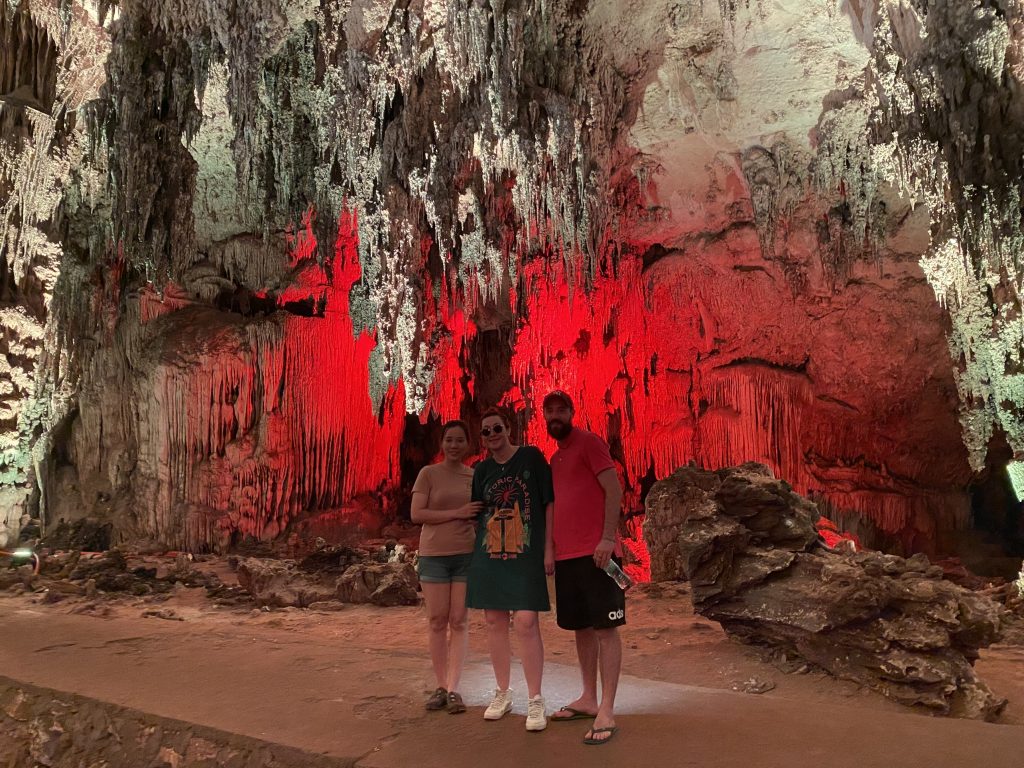
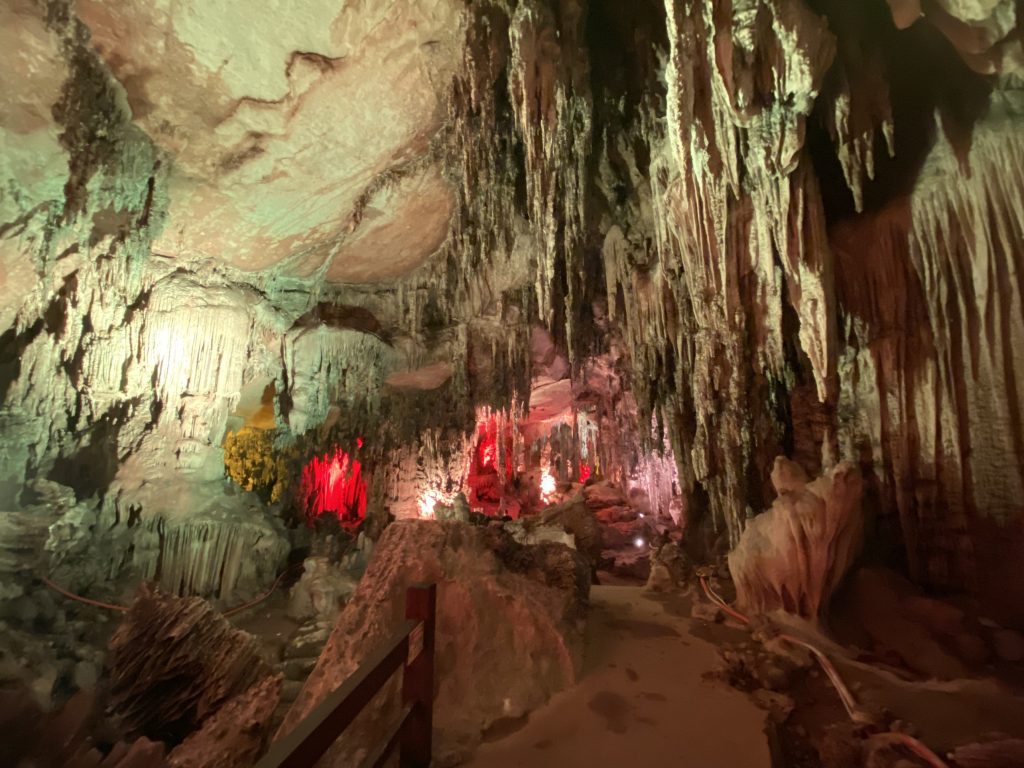
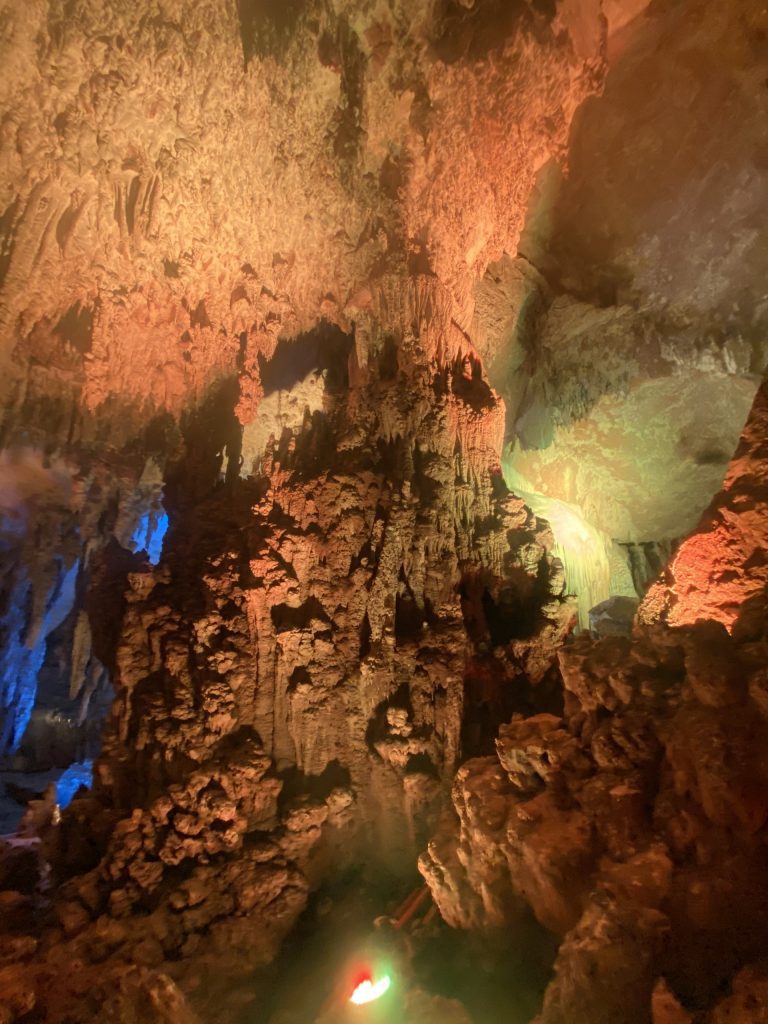
Situated about 6 km south of the main lake basin in Quang Khe commune, Hua Ma Cave sits halfway up a forested mountain. After climbing 300 stone steps, visitors enter an expansive cavern over 700 meters long with a 50-meter-high ceiling. The interior contains some of the most intricate and well-preserved stalactite formations in northern Vietnam, illuminated by natural light entering from cave openings.
6. Outdoor Adventure: Trekking Routes & Kayaking
Beyond traditional boat excursions, Ba Be National Park is an eco-adventure playground offering hiking routes for every endurance level.
       [ LEVEL 1: Gentle (1-2 Hours) ]
   Pac Ngoi ──── Scenic Valley Walk ──── Coc Toc Village
                     (Paved paths, flat rice fields)

       [ LEVEL 2: Moderate (3-5 Hours) ]
   Pac Ngoi ──── Khau Qua Viewpoint ──── Mo Ne ──── Bo Lu
                 (Forest trails, limestone climbs)

       [ LEVEL 3: Deep Jungle (1-2 Days) ]
   Coc Toc ──── Dan May Peak ──── Na Nghe (Dao Village) ──── Dau Dang
              (Primary rainforest, 15-20km, guide required)
Scenic Kayaking & SUP Circuits
Kayaking allows you to navigate the tranquil shallow inlets, paddle beneath overhangs, and reach remote bays that motorized boats cannot access.
- Classic Paddle Route: Launch from Coc Toc village pier → Paddle across Pe Lu to Widows Island → Explore the reed-lined shores of Bo Lu → Return at sunset (approx. 2 to 3 hours).
Best Trekking Trails in Ba Be
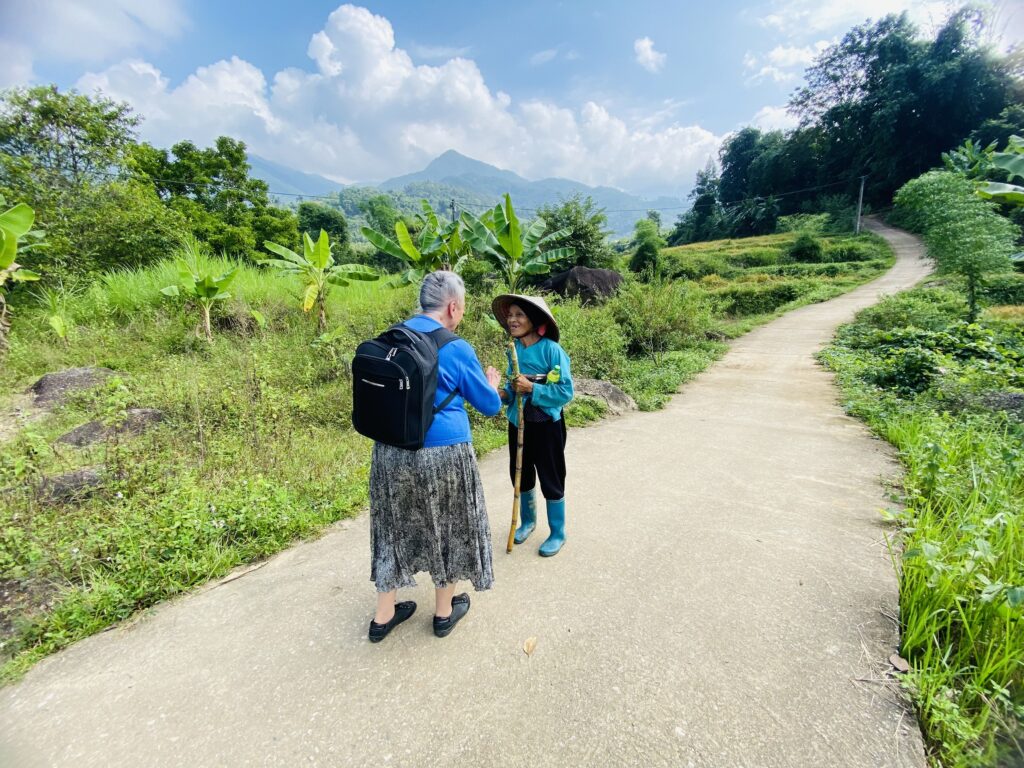
- Easy Walk (1 – 2 hours): Stroll the paved rural road connecting Pac Ngoi, Bo Lu, and Coc Toc villages. This walk takes you past traditional stilt architecture, grazing water buffaloes, cornfields, and lakeside piers.
- Moderate Half-Day Hike (3 – 5 hours, 8–10 km): Hike from Pac Ngoi up through secondary rainforest to the Khau Qua viewpoint, descending through Mo Ne hamlet and returning via Bo Lu. You will cross bamboo groves and enjoy elevated panoramas of the Three Lakes.
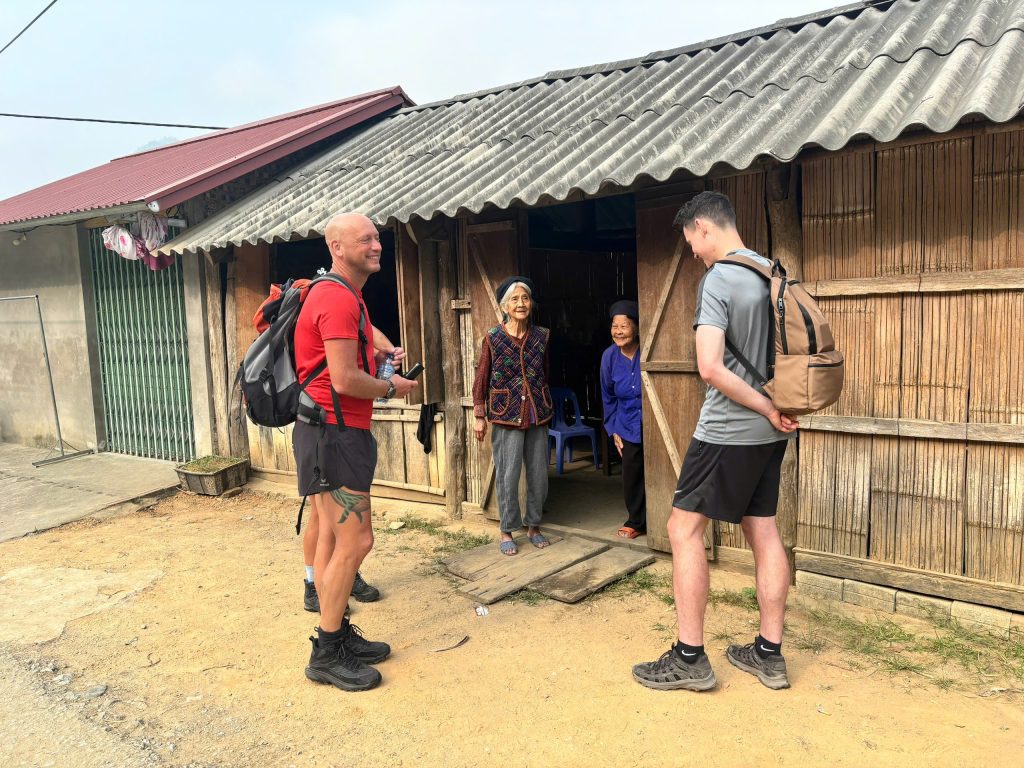
- Challenging Multi-Day Jungle Trek (1 – 2 days, 15–22 km): Trek deep into primary rainforest reserves, climbing the mountain passes to reach remote ethnic H’Mong and Dzao Tien settlements such as Dan May and Na Nghe. This route requires an experienced local guide and can include an overnight stay in an authentic mountain village homestay before descending toward Dau Dang Waterfall.


7. Where to Stay: Homestays & Hotels
Ba Be offers three primary accommodation zones, catering from budget backpackers to travelers seeking boutique comfort:
1. Pac Ngoi Village (Bản Pác Ngòi)
The most established cultural tourism village in the park, situated along the Leng River near the southern shore.
- Vibe: Lively, cultural, convenient boat access.
- Accommodation Style: Traditional Tay stilt houses with polished wooden floors, shared or private bathrooms, and open verandas facing the river and cornfields.
2. Coc Toc Village (Bản Cốc Tộc)
Located further west along the lakeshore, nestled against towering limestone cliffs.
- Vibe: Quiet, nature-focused, relaxed.
- Accommodation Style: Family-run homestays and eco-lodges with immediate kayak launches and direct access to mountain trekking trailheads.
3. Na Kieng Village (Bản Nà Kiêng)
Positioned between Pac Ngoi and the administrative National Park
- Vibe: Authentic, tranquil, and less commercial.
- Accommodation Style: Peaceful family homes offering home-cooked dining and serene lake vistas.
8. Local Food & Specialty Cuisine
Dining in Ba Be National Park is centered around fresh, wild-foraged ingredients, river catches, and ethnic culinary traditions:
- Grilled Ba Be Lake Fish (Cá nướng Pác Ngòi): Small freshwater fish caught directly from the lake, skewered on bamboo sticks, and grilled slowly over natural wood embers until crispy.
- Sour Pork & Smoked Hill Pork (Thịt lợn gác bếp): Local black pig pork marinated in mountain spices, ginger, and wild herbs, cured or smoked slowly over the kitchen hearth.
- Wild Fern Salad (Rau dớn xào tỏi): Fresh forest ferns harvested along mountain streams, stir-fried with garlic or boiled and dipped in sesame salt.
- Sour Shrimp (Tôm chua Ba Bể): Freshwater lake shrimp fermented with sticky rice, galangal, chili, and garlic—an intense regional delicacy eaten with boiled pork belly and mountain herbs.
- Bamboo Tube Rice (Cơm lam) & Five-Color Sticky Rice: Fragrant highland glutinous rice steamed inside fresh bamboo tubes over hot coals.


9. Recommended 3 Days 2 Nights Itinerary (3D2N)
This balanced itinerary combines highlights, moderate trekking, lake boating, and ethnic culture.
  DAY 1: Arrival & Sunset Paddle
  [Hanoi] ──(Expressway)──► [Ba Be Arrival] ──► [Homestay Check-in] ──► [Sunset Kayak / SUP]

  DAY 2: Full-Day Boat Expedition & Cultural Exploration
  [Buoc Lom Pier] ──► [Puong Cave] ──► [Dau Dang Fall] ──► [Fairy Pond] ──► [Widows Island]

  DAY 3: Morning Caves, Local Market & Return
  [Hua Ma Cave] ──► [Cho Ra / Local Market] ──► [Lunch] ──(Expressway)──► [Hanoi Old Quarter]
Day 1: Hanoi to Ba Be Lake – Arrival & Sunset Kayaking
- 07:30 AM: Depart Hanoi Old Quarter by limousine van via Highway CT07.
- 12:30 PM: Arrive at Ba Be National Park. Check into your stilt-house homestay in Pac Ngoi or Coc Toc village; enjoy a traditional lunch.
- 02:30 PM: Rent a kayak or SUP board to explore Pe Lu Lake. Paddle around limestone bluffs and secluded coves.
- 05:30 PM: Watch the sunset reflect over the water from your homestay veranda.
- 07:00 PM: Family-style dinner featuring grilled lake fish and regional specialties; enjoy local corn wine (rượu ngô).
Day 2: The Grand Lake & River Circuit (Puong Cave – Dau Dang – Fairy Pond)
- 08:00 AM: Board your private long-tail boat at Buoc Lom Pier on the Nang River.
- 09:00 AM: Cruise inside the towering arches of Puong Cave; view the bat colonies.
- 10:30 AM: Cruise downriver to the upper dock of Dau Dang Waterfall. Enjoy a short forest walk along the cascading river.
- 12:00 PM: Riverside lunch at a local Tay eatery near Dau Dang.
- 01:30 PM: Re-enter the main lake basin. Disembark to hike up to the secluded Fairy Pond (Ao Tiên).
- 03:00 PM: Visit An Ma Temple and make a scenic photo stop at Widows Island.
- 05:00 PM: Return to the village. Optional 1-hour bicycle ride around the rice fields of Bo Lu.
Day 3: Hua Ma Cave – Ethnic Markets – Return to Hanoi
- 08:00 AM: Rent a motorbike or hire a driver to visit Hua Ma Cave (6 km south). Climb up to explore the massive dry stalactite chambers.
- 10:30 AM: Visit the local market (such as Cho Ra Market or Nam Mau communal market depending on the day of the week) to purchase local dried wood-ear mushrooms, honey, and handmade vermicelli (miến dong).
- 11:30 AM: Check out of the homestay and have a farewell lunch.
- 01:00 PM: Board the return limousine shuttle.
- 06:00 PM: Arrive back in Hanoi Old Quarter.
10. Packing List & Essential Travel Tips
- Footwear: Bring sturdy, broken-in trail running shoes or hiking boots with aggressive grip. Karst limestone paths and jungle clay become slick after rain.
- Clothing: Pack quick-drying layers, a lightweight waterproof rain jacket, a modest set of clothing for temple visits, and a warm fleece for cool winter evenings.
- Insect Repellent & Leech Protection: Deep jungle trails during the summer and rainy months harbor leeches; bring high-DEET insect repellent or anti-leech socks.
- Cash is Essential: There are no ATMs in Pac Ngoi or Coc Toc villages. The closest ATM is located in Cho Ra town (~15 km away). Bring sufficient cash (VND) for boat rentals, homestay services, and tips.
- Connectivity: 4G/5G mobile signals (Viettel, Vinaphone) are reliable in the villages, but connectivity drops when trekking deep into mountain valleys. Download offline maps (Google Maps, Maps.me) prior to departure.
11. Frequently Asked Questions (FAQ)
Is Ba Be National Park worth visiting?
Yes. Unlike heavily commercialized destinations, Ba Be provides an authentic, tranquil, and ecologically diverse experience. It is ideal for nature lovers, hikers, kayakers, and those wanting to experience genuine ethnic minority culture without crowds.
How many days do you need in Ba Be Lake?
A 3-day, 2-night (3D2N) itinerary is ideal to complete the full-day boat circuit, hike the viewpoints, explore caves, and experience kayaking without feeling rushed. A 2-day, 1-night trip is doable but leaves little time for off-the-beaten-path trekking.
Can you swim in Ba Be Lake?
Yes, swimming is allowed and popular during the warm months (May through September) in designated deep-water areas such as around Widows Island. Always wear a life jacket, as karst lake depths vary considerably.
Should I book a package tour or travel independently?
- Independent travel works smoothly if you are comfortable booking limousine buses and hiring boats at local piers.
- All-inclusive package tours are recommended for travelers wanting guided multi-day jungle treks, organized kayak logistics, English-speaking interpretive guides, and stress-free door-to-door transportation from Hanoi.



Pingback: Ha Giang to Ba Be Lake: Meo Vac & Routes Guide
Pingback: Where to Stay in Ba Be: Best Homestays & Hotels Guide
Pingback: Cao Bang Loop Tour 3D2N: Ba Be Lake & Ban Gioc Waterfall